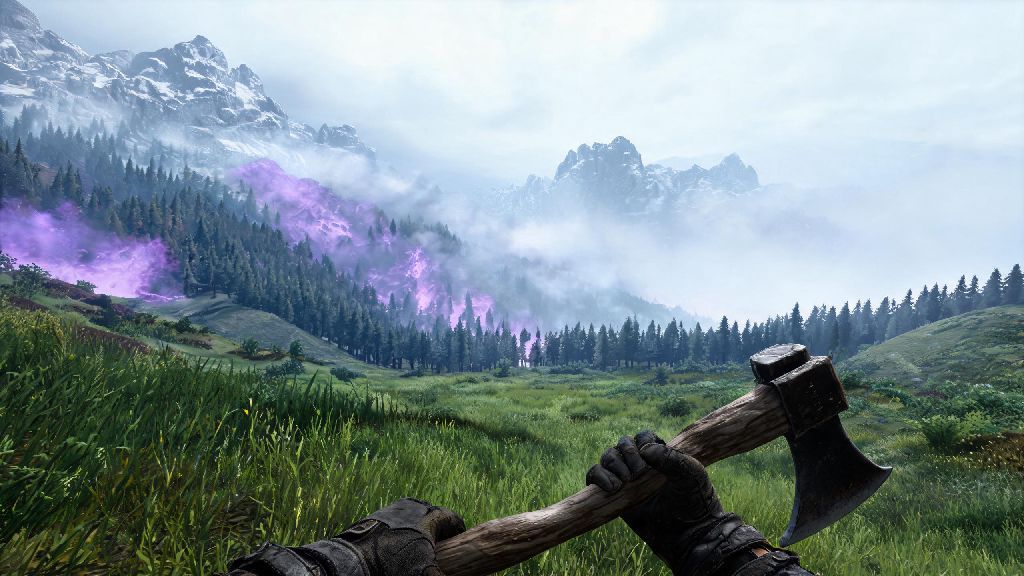
If you've just booted up Enshrouded for the first time, you've probably stared out at the mist-covered peaks and rolling green valleys from your first Flame Altar and wondered how big is Enshrouded, exactly. This open-world survival crafting game blends base building, combat, and RPG progression with a massive, dangerous world full of secrets, and it's easy to underestimate just how much ground there is to cover even after your first 10 hours of play. We've spent dozens of hours exploring every corner of the map, unlocking fast travel points, and pushing through the deadliest Shroud zones to give you a complete breakdown of the game's total playable size, hidden areas, and what you can expect to find in each region.
How Big is Enshrouded: Core Map Size Breakdown
If you're only used to small, linear survival games, the answer to how big is Enshrouded might surprise you. The game's full hand-crafted map spans roughly 32 square kilometers of explorable terrain, though not all of it is accessible when you first start playing. A large portion of the map is covered in the corrupting Shroud, a toxic mist that drains your health quickly and spawns high-level enemies, and you'll need to upgrade your Flame Altar repeatedly to increase your Shroud resistance and unlock new regions.
The flat 2D map size doesn't tell the full story, either. Enshrouded's world is built with extreme verticality, from deep underground cave systems that stretch for kilometers to floating ancient ruins high above the cloud line. You can climb almost every surface in the game, dig through soft rock, and glide across wide valleys, so the actual amount of explorable space is closer to 40 square kilometers when you account for all vertical layers. Walking from the southernmost point of the starting Springlands biome to the northern peak of the Frozen Heights takes roughly 45 minutes of real, uninterrupted walking time, and that's without stopping to fight enemies or collect resources.
One key thing to note is that no part of Enshrouded's map is procedural generated, so every biome, ruin, and resource spawn is in the same spot across every playthrough. That makes it far easier to plan your exploration runs once you learn the map, and you won't waste hours searching for a specific biome like you might in other procedurally generated survival games.
Explorable Biomes and Hidden Areas
Enshrouded's map is split into three distinct main biomes, each with unique resources, enemies, and quest lines to explore. The starting Springlands biome makes up roughly 40% of the total map, with dense forests, rolling farmland, small abandoned villages, and low-level enemies perfect for new players to learn the game's mechanics. The mid-game Kindlewastes biome is a harsh, arid desert filled with volcanic vents, ancient tombs, and high-level raider enemies, and it's where you'll find most of the game's mid-tier crafting resources like iron and sulfur. The endgame Frozen Heights biome is a snow-covered mountain region with brutal cold effects, endgame boss fights, and the rarest crafting resources in the game.
If you're trying to calculate how big is Enshrouded for completionist play, you can easily triple the base map size when you account for all hidden underground and floating areas. Most of these areas don't show up on your default map, so you'll have to explore off the beaten path to find them. Many hidden caves hold rare Flame essence to upgrade your Altar, exclusive crafting recipes, and powerful legendary gear that makes even the hardest Shroud zones easier to navigate.
Exploring every inch of Enshrouded's map can take dozens of hours, and it's common to hit a wall where you need to grind for resources or upgrade your Flame before you can access a new region. Many players take short breaks between long exploration runs to reset their focus, especially if they've spent an hour fighting through high-level Shroud enemies to reach a new area. Casual players who want a quick, low-stakes distraction during these breaks often play Slots Spin, a fast, casual game that fits perfectly into 5 to 10 minute gaps without pulling you too far away from your survival goals.
When you get back to exploring, make sure to check every small ruin and collapsed building you pass, as many hold rare crafting recipes, Flame essence, or valuable loot that makes the extra detour worth it. You'll also find random NPC survivors scattered across the map, who will move back to your base and unlock new crafting stations and quests once you rescue them.
How Traversal Tools Expand Your Explorable Space
Many new players underestimate how big is Enshrouded until they unlock all traversal tools and realize how much previously unreachable space opens up. As you progress through the game, you'll unlock four core traversal tools that drastically increase how much of the map you can reach, and cut down travel time across already explored areas:
Fast travel points, unlocked by activating Flame Altars across the map, also let you jump between explored regions instantly, so you don't have to walk back and forth across the entire map every time you need to grab a specific resource from your base. It's a good idea to unlock every Flame Altar you find as soon as you can, even if you don't plan on exploring that region right away, as it will save you hours of travel time later on. You can also build small outposts with extra storage and crafting stations in remote areas to avoid having to return to your main base every time your inventory fills up.
How Enshrouded's Map Size Compares to Other Survival Games
When players ask how big is Enshrouded, they often forget to account for verticality and hidden underground areas that add tons of extra explorable space. Compared to other popular survival games, Enshrouded's map is smaller than procedurally generated games like Valheim or Ark: Survival Ascended, but it's far denser with hand-crafted content. You won't walk for 10 minutes through empty, repetitive terrain like you might in those games, because every section of Enshrouded's map has unique points of interest, loot, or enemies to encounter.
The smaller, denser map is a deliberate design choice from the developers, and it works well for both casual and hardcore players. Casual players don't have to spend hours traveling just to complete a single quest, and completionists don't have to sift through hundreds of square kilometers of empty terrain to find all the game's secrets. The devs have also confirmed that they'll be adding new, free biomes to the map in future updates, so the total playable size will only grow over time as more content is released.
From personal experience, Enshrouded hits the perfect sweet spot for map size. I've played survival games with maps so large that exploring felt like a chore, and games with maps so small that I ran out of new content in a few hours. Enshrouded's map is big enough to feel like a real, living open world, but small enough that you never feel like you're wasting time just moving from one point to another.
At the end of the day, how big is Enshrouded depends as much on how you play as it does on the raw square kilometer count. If you rush through the main quest and only explore the areas required to progress, you can beat the main story in 30 to 40 hours without seeing most of the map. If you take your time to explore every cave, rescue every NPC, and build out multiple bases across different biomes, you can easily sink 100+ hours into the game without running out of new areas to discover. Whether you're a casual player who only plays a few hours a week or a completionist who wants to unlock every secret, the map size is perfectly scaled to fit almost any playstyle.