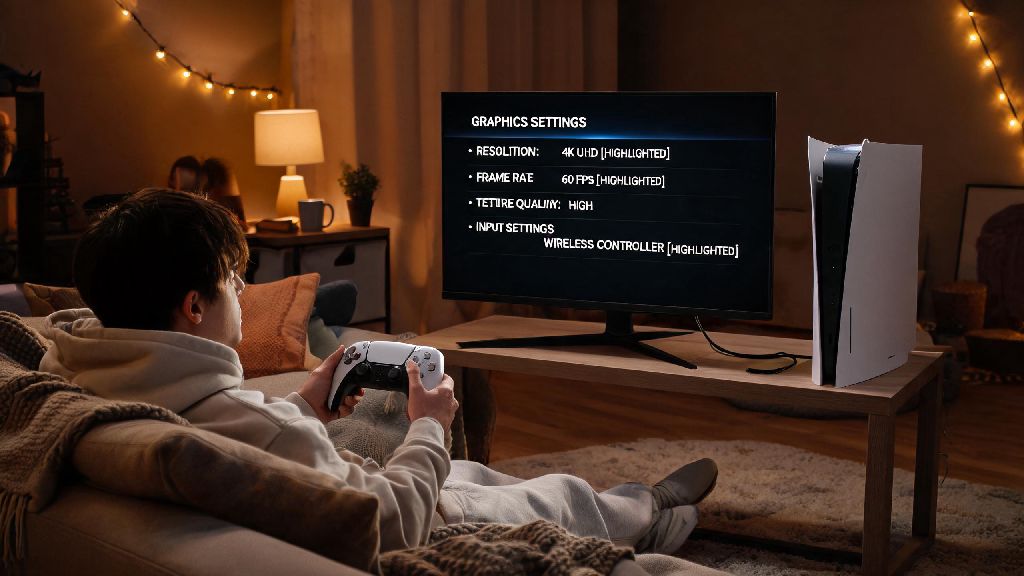
If you’ve ever spent 20 minutes tweaking graphics settings before booting up a new survival game, you know how frustrating it is to hit a wall with input support right off the bat. You might be asking does Enshrouded support controller if you prefer the relaxed, couch-friendly feel of a gamepad over hunching over a keyboard and mouse for hours. I’ve sunk over 120 hours into Enshrouded across both PC and PS5, so I’ve tested every input option extensively to break down exactly what works, what doesn’t, and how to get your controller running smoothly no matter what platform you play on. This guide covers every edge case, from third-party controller compatibility to common input bugs you might run into mid-playthrough.
Does Enshrouded Support Controller for All Play Styles and Platforms?
The short answer is yes, Enshrouded has full native controller support across all official platforms, including PC, PlayStation 5, and Xbox Series X/S. Developer Keen Games added controller support at the game’s early access launch, and the feature was fully optimized for the 1.0 full release, with no locked mechanics or restricted content for controller players. You don’t need to download any extra software or mod the game to use a controller, unless you’re using a niche third-party gamepad that requires custom configuration.
On PC, Enshrouded recognizes almost all mainstream controller models, including official Xbox One/Series controllers, PS4/PS5 controllers, Switch Pro controllers, and popular third-party options like 8BitDo and PowerA pads. Native controller support works for both single-player and co-op sessions, no extra setup needed if you’re playing split-screen or online with friends. If you’re playing split-screen co-op on PC or console, you can connect up to four controllers at once, all with their own custom bind settings. I tested this last month with three friends on my PS5, and we didn’t run into any input conflicts or detection issues at all, even when two of us were using third-party 8BitDo controllers.
Cloud gaming versions of Enshrouded, including those available on GeForce Now and Xbox Cloud Gaming, also support controllers, as long as your device recognizes the gamepad before you launch the cloud session. The only platform where controller support is not officially available is the macOS port of Enshrouded, though many players report that Steam Input still works for most controller models if you add the game to your Steam library as a non-Steam title.
Step-by-Step Controller Setup for Enshrouded on PC
Setup is almost automatic for most players, but there are a few small tweaks you can make to avoid detection issues and get the most out of your controller. If you’re playing the Steam version of Enshrouded, the platform will usually detect your controller automatically, but you can follow these steps to ensure everything is configured correctly, especially if you’re using a non-Xbox controller:
If you’re playing the Epic Games Store version of Enshrouded, you can still use Steam Input by adding the game to your Steam library as a non-Steam game, then following the same steps above. You can also use your controller manufacturer’s official configuration software if you don’t want to use Steam, but most players find Steam Input more reliable for custom binds and compatibility across different games.
One common issue I ran into when testing PS5 controller support on PC was random Bluetooth disconnections mid-game. I tried updating my Bluetooth drivers and resetting the controller, but nothing worked until I switched to a wired USB-C connection. Switching to a wired USB connection almost always fixes the problem immediately, and it also reduces input lag for players who care about precise movement during combat. If you want to use Bluetooth, make sure no other devices are connected to your PC’s Bluetooth at the same time, as this can cause interference.
Pros and Cons of Using a Controller for Enshrouded Gameplay
Choosing between controller and mouse and keyboard comes down to your personal play style, and Enshrouded’s flexible input system means you don’t have to stick to one option permanently. I switch between inputs depending on what I’m doing in the game, and there are clear advantages and disadvantages to both.
For exploration and combat, controller is almost always my first pick. The analog sticks give you far finer control over movement than WASD keys, which makes climbing steep cliffs, gliding through the Shroud, and dodging fast-moving enemy attacks feel much smoother. It’s also far more comfortable for long play sessions, as you can lean back on the couch instead of hunching over a desk. The built-in aim assist for controller is well-balanced too, it gives you a small boost for long-range bow and staff shots without feeling overpowered or like it’s doing all the work for you.
The biggest downsides of using a controller show up when you’re building or editing your base, or when you’re trying to line up very precise long-range shots. Mouse input is far faster for clicking through build menus and placing decor exactly where you want it, and mouse aim is more precise for taking out distant enemies without wasting ammo. Controllers also have far fewer customizable buttons than a full keyboard, so you might have to use combo binds for less common actions like toggling your flashlight or opening your map. Controller players have the exact same access to all in-game features as M&K players though, there are no locked mechanics or hidden advantages for either input method.
For example, when you’re gliding through the Shroud and dodging floating decay nodes, the analog stick on a controller gives you much finer control over your movement direction than WASD keys. But when you’re trying to line up a perfect bow shot on a distant Shroud Warden, mouse aim will almost always be faster and more precise, even with aim assist turned up to maximum. The best part is you can switch between inputs at any time without restarting the game, so you can use controller for exploration and swap to mouse for building in two seconds flat.
Common Enshrouded Controller Issues and Quick Fixes
Controller support is very polished for most players, but there are a few common bugs you might run into depending on your platform and controller model. Most of these issues are easy to fix in less than a minute, no technical expertise required.
The most common issue is the game not detecting your controller at all when you launch it. This is almost always caused by you plugging the controller in after the game has already started, or another game running in the background that’s using the controller input. Fix it by closing any other open games, plugging your controller in, then restarting Enshrouded. If that doesn’t work, check for driver updates for your controller or update Steam to the latest version. Most controller bugs are caused by outdated Steam Input configurations, not the game itself, so updating Steam will fix 90% of common issues.
Another frequent issue is incorrect button mapping, where pressing the A button opens your inventory or the right stick controls your movement instead of the camera. I ran into this myself when I first tried using my Switch Pro controller on PC a few months ago, and it turned out I had both Steam Input and Nintendo’s official Pro Controller software running at the same time, causing conflicting inputs. Disabling the third-party controller software fixed the problem in 10 seconds, no restart required. If you’re still having mapping issues, reset your controller binds to default in the Enshrouded settings menu.
Camera drift or sticky movement is another common problem, usually caused by worn-out controller sticks or dead zone settings that are too low. You can fix this by adjusting the analog stick dead zones in the Enshrouded control settings, or calibrating your controller through Steam’s controller settings menu. If the drift is still happening outside of Enshrouded, you might need to replace your controller or repair the stick drift with a third-party kit. Avoid using third-party input remapping software alongside Enshrouded, as these often conflict with the game's native input system and cause random disconnections or delayed inputs.
For console players, the only common controller issue is minor input lag, which is almost never caused by the game itself. You can fix this by enabling your TV’s game mode, turning off variable refresh rate if your TV doesn’t support it well, or using a wired controller connection instead of Bluetooth. Console versions of Enshrouded have fully optimized controller support out of the box, so you won’t need to tweak any settings beyond adjusting sensitivity or button binds to match your preferences.
At the end of the day, whether you prefer controller or mouse and keyboard comes down to your personal play style, and you don’t have to pick one permanently to enjoy the game. We already answered does enshrouded support controller clearly, and the built-in customization options mean you can tweak the input to feel exactly how you want it, no matter what platform you play on. If you’ve been on the fence about trying a controller for your next playthrough, give it a shot – you might be surprised how much more relaxing exploring the Shroud feels when you’re leaned back on the couch instead of hunched over your desk. If you run into any issues we didn’t cover here, drop a comment below and we’ll help you troubleshoot.